A quiet shift is happening in business.
Not because of new software.
Not because of faster tools.
But because companies are no longer hiring for tasks.
They are hiring for outcomes.
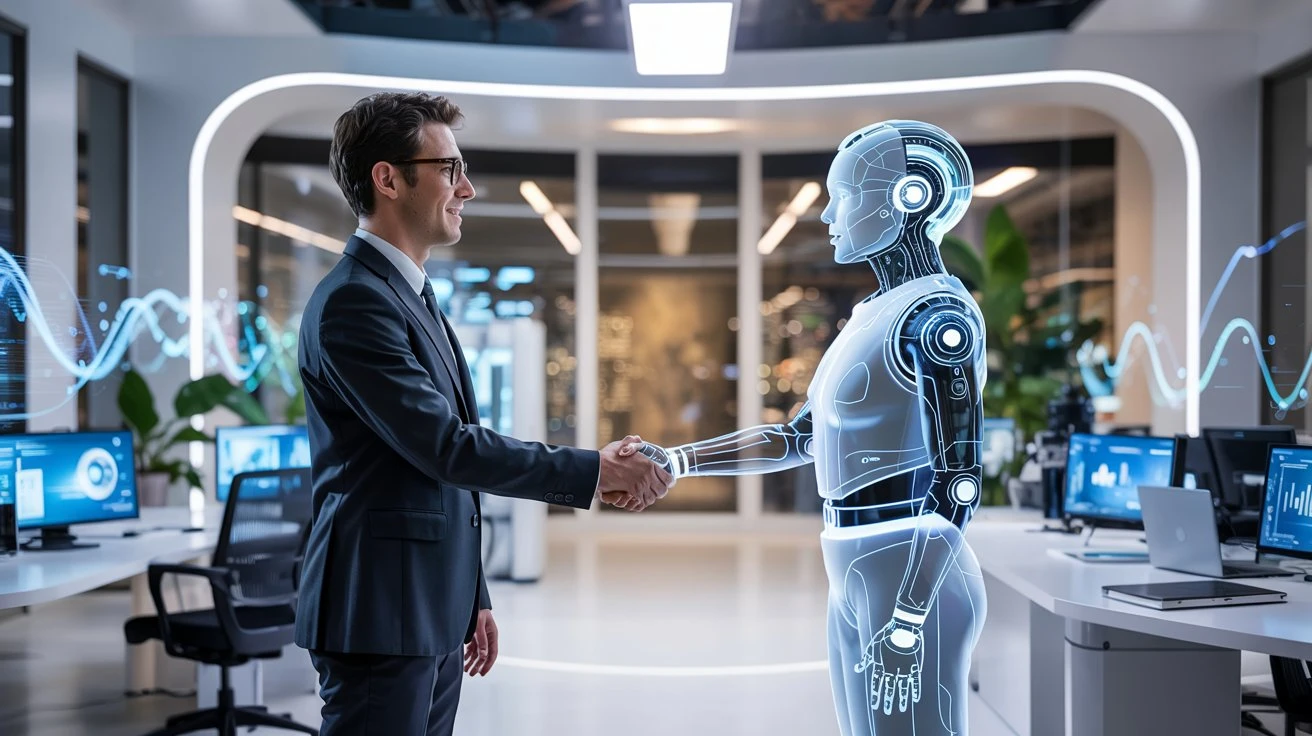
The most scalable businesses in 2026 will not grow by adding more people to broken systems. They will grow by deploying the best AI employees; role-based digital workers designed to run operations, handle workflows, follow up with customers, and execute processes at scale.
What you’ll get from this guide
A clear definition of AI employees, the traits that separate “real” digital workers from generic tools, and a model for building a digital workforce that creates operational momentum.
What Are AI Employees (And What They Are Not)
AI employees are role-based digital workers designed to perform operational work inside your business.
They are not:
- Chatbots
- Standalone tools
- Automation scripts
- Generic AI assistants
The best AI employees are designed to behave like real team members. They follow workflows, make decisions based on rules, integrate with your systems, and perform consistent tasks without fatigue.
They don’t replace people. They replace friction.
Instead of hiring more staff to chase leads, send reminders, update systems, and route tasks, businesses now deploy AI employees to handle these workflows automatically.
This is not a future trend. It is already happening across professional services, healthcare, real estate, logistics, finance, retail, and operations-heavy industries.
Why Businesses Are Switching to AI Employees
Most companies are not slow because their people are lazy.
They are slow because:
- Tasks are handed off manually
- Systems do not communicate
- Approvals are delayed
- Follow-ups are inconsistent
- Work lives in inboxes instead of workflows
Every manual step adds friction
Friction creates delays, errors, and inconsistent execution.
Every friction point kills momentum
Momentum is the hidden advantage of scalable operators.
The best AI employees eliminate these hidden slowdowns by:
- Automating internal processes
- Routing work instantly
- Triggering follow-ups
- Updating systems automatically
- Connecting tools into a single workflow
This creates what most businesses lack: operational momentum.
What Makes the Best AI Employees Different
Not all AI is equal.
The best AI employees are defined by five critical traits:
They are not generic assistants. Each AI employee is designed for a specific function: sales, operations, support, scheduling, content, compliance, reporting, or coordination.
They do not respond randomly. They execute structured processes just like your best team members.
They connect to CRMs, calendars, forms, inboxes, dashboards, databases, and internal tools.
They never forget. They never miss tasks. They never skip steps.
They handle more volume without needing raises, training cycles, or burnout recovery.
The Digital Workforce Model
Think of your business as a system of flows:
The best AI employees sit inside these flows and remove friction at every step.
Before
Human → Tool → Human → Tool → Delay → Error
After
AI → Workflow → System → Action → Completion
This creates speed, consistency, and scalability.
Where the Best AI Employees Work First
AI employees usually begin in areas with the most manual repetition:
- Lead follow-ups
- Appointment scheduling
- Reminders and confirmations
- CRM updates
- Document processing
- Task routing
- Reporting and summaries
- Customer communication
- Data entry
- Knowledge access
These are not “low-value” tasks. They are business-critical.
They just don’t require human judgment.
How AI Employees Learn Your Business
This is where many businesses misunderstand AI.
AI employees do not magically “know” your company.
They must be taught.
This is why AI employee training is a critical part of building a digital workforce.
Training involves:
- Mapping your workflows
- Defining decision rules
- Providing data and examples
- Teaching system behavior
- Testing and optimization
Well-trained AI employees outperform untrained ones the same way trained staff outperform new hires.
When It Makes Sense to Add AI Employees
If your business has:
- Growing lead volume
- Slow internal processes
- Missed follow-ups
- Repetitive admin work
- Overworked staff
- Disconnected systems
Then you are already paying the price for not having a digital workforce.
This is when most companies decide to hire an AI employee; not as a replacement, but as an operational multiplier.
AI Employees vs Traditional Hiring
| Human Hire | AI Employee |
|---|---|
| Salary & benefits | Fixed operating cost |
| Limited hours | 24/7 availability |
| Training cycles | Instant scaling |
| Human error | System consistency |
| Fatigue | No burnout |
This does not remove the need for people. It removes the need for people to do repetitive work.
The Strategic Advantage of AI Employees
Businesses that adopt AI employees gain:
They move from reactive operations to system-driven growth.
The Future of Work Is Digital Coworkers
By 2026, businesses will no longer ask:
“Should we use AI?”
They will ask:
“How many digital coworkers do we have running our operations?”
The best AI employees are not tools. They are the new operational layer of modern businesses.
They do not replace your team.
They empower them.
Final Thought
Growth does not come from working harder. It comes from building systems that work for you.
The businesses that win the next decade will not scale with more people doing manual work.
They will scale with the best AI employees running their workflows, protecting their time, and multiplying their output.
And once you see them in action, you will not ask if they make sense.
You will ask how you ever operated without them.