Artificial intelligence is not transforming the workforce with dramatic headlines alone. It is reshaping work quietly, structurally, and at a pace that most organizations are still underestimating.
Public debate often centers around a single question. How many jobs will AI eliminate.
That question, while attention grabbing, misses the more important reality. Jobs are not disappearing overnight. They are being reengineered from the inside out.
The real story is not job destruction. It is job transformation.
This is the silent workforce shift, and it is already well underway.
The Mistake in the Public Narrative
Most discussions about AI and employment focus on macro statistics. Ten percent of jobs at risk. Twenty percent of tasks automatable. Millions of roles exposed.
But those numbers do not explain how change actually unfolds inside organizations.
AI does not walk into a company and replace an entire department in a single decision. Instead, it begins at the task level.
- Data aggregation
- Document drafting
- Scheduling coordination
- First level customer communication
- Report summarization
- Compliance tracking
- Research compilation
These tasks are not small. They form the operational backbone of knowledge work.
When these tasks are automated or accelerated, the role itself begins to evolve.
The employee who once spent six hours preparing reports now spends one hour reviewing AI output and five hours making strategic decisions based on that data.
Research from MIT Sloan School of Management supports this view, noting that AI adoption often correlates with productivity growth and, in many cases, expanded hiring due to new capabilities.
The shift is structural. It is not theatrical.
From Task Execution to Workflow Orchestration
The most important workforce transition happening today is a shift from execution to orchestration.
In the past, value was tied to the ability to complete tasks manually and efficiently.
Today, value is increasingly tied to the ability to direct AI systems effectively, validate AI generated insights, integrate AI into operational workflows, and improve systems continuously.
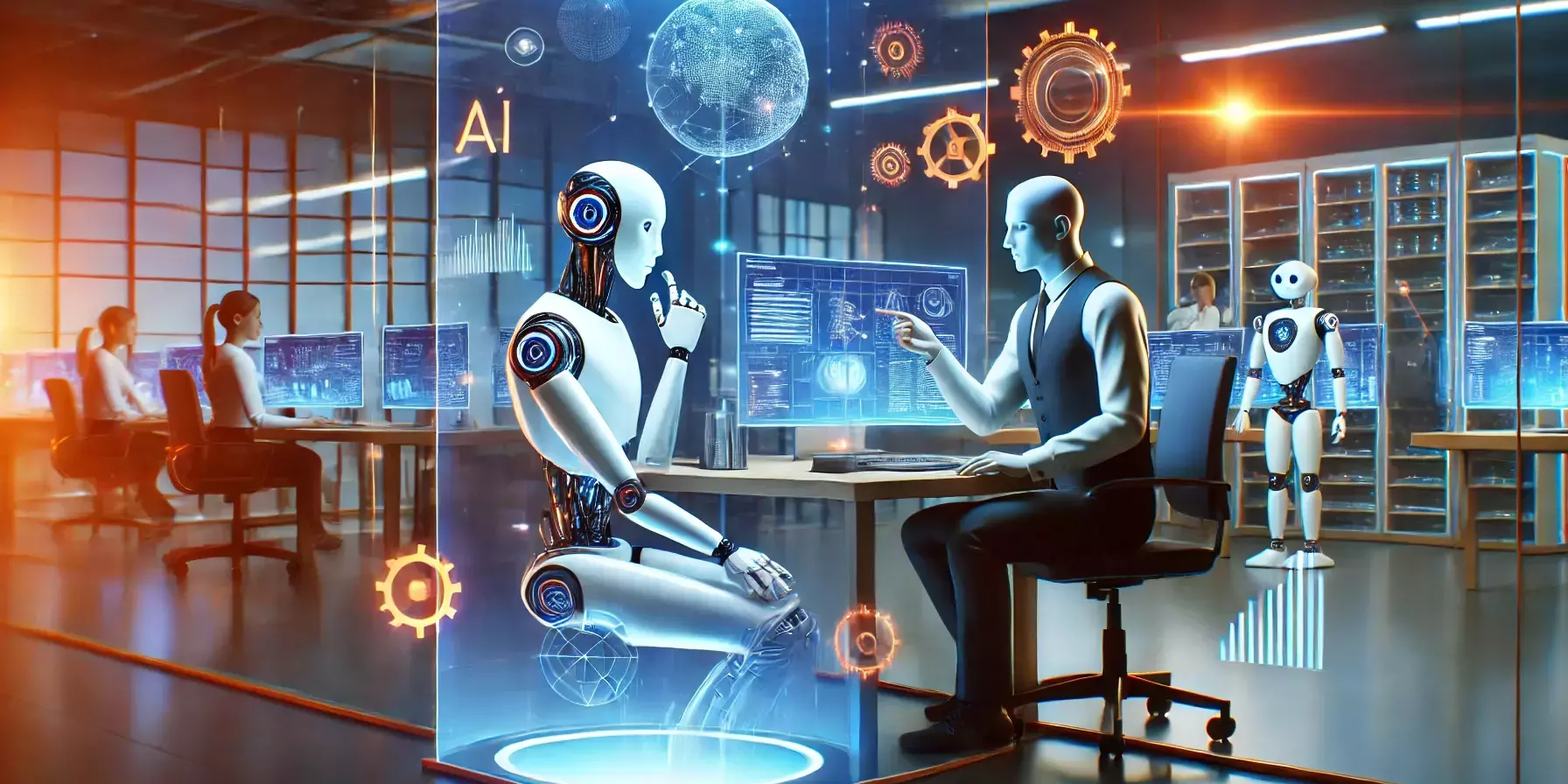
This is why we are seeing the rise of hybrid workforce models, where digital coworkers operate alongside human teams.
The future workforce is not smaller. It is layered.
Humans focus on strategy, empathy, negotiation, and decision making. AI handles repetition, speed, pattern recognition, and scale.
The Rise of the AI Augmented Professional
Two employees can hold the same title and operate at completely different performance levels. The differentiator is AI literacy.
AI literacy is not about writing prompts casually. It is about building repeatable workflows, setting standards, measuring outcomes, and creating feedback loops.
- Structuring instructions for consistent outputs
- Embedding AI into repeatable workflows
- Measuring AI performance and quality
- Designing review and exception handling
- Improving systems with feedback loops
Understanding how to train and manage digital coworkers properly is critical.
AI without governance creates inconsistency. AI with structured management creates competitive advantage.
The Productivity Divide Is Expanding
A clear separation is forming between companies embedding AI into structured operational systems and companies experimenting without architectural planning.
The difference compounds over time. Structured automation eliminates manual bottlenecks, reduces operational friction, and improves delivery speed.
The key is not simply adopting AI. It is scaling AI intentionally.
White Collar Roles Are Experiencing the Fastest Shift
Knowledge work is experiencing rapid task transformation. Legal research, financial modeling, marketing content development, HR screening, operations reporting, and analytics are being reshaped.
AI systems excel at structured information processing. That means cognitive roles built on predictable patterns are highly exposed to task automation.
However, this does not eliminate the need for these roles. It changes the skill profile required to succeed in them.
- Execution time compresses
- Oversight and quality control expand
- Decision making moves closer to the worker
- Exception handling becomes a premium skill
- Communication and alignment become more important
The Psychological and Cultural Barrier
Technology adoption rarely fails because of capability. It fails because of human resistance.
Employees fear replacement. Managers fear disruption. Executives fear reputational risk. This resistance slows transformation more than any technical limitation.
Sustainable AI integration requires thoughtful change management, transparent communication, and trust building across teams.
What Leaders Must Understand Now
The silent workforce shift demands new leadership thinking. Leaders must ask which tasks are repetitive and predictable, where manual effort slows delivery, how AI reduces friction without destabilizing culture, and what new skills will define performance in the next three years.
Replacing people should not be the starting point. Replacing inefficiencies should be.
System clarity must come before system acceleration.
The Future Workforce Is Hybrid
The emerging workforce model is neither fully human nor fully automated. It is hybrid.
- Human strengths: strategic thinking, emotional intelligence, ethical reasoning, negotiation, creativity, leadership
- AI strengths: speed, pattern detection, scalability, data processing, consistency
Companies that intentionally design around this hybrid model move faster, operate leaner, and compete more effectively. Companies that ignore it struggle under the weight of manual inefficiency.
Conclusion: The Quiet Redesign of Work
The loud narrative claims AI is eliminating jobs. The quieter and more accurate reality shows that AI is redesigning work.
Roles are being compressed at the execution layer and expanded at the strategic layer.
Employees who adapt gain leverage. Companies that build systems gain advantage. Leaders who redesign workflows intentionally gain resilience.
The silent workforce shift is not about collapse. It is about evolution.
Organizations that recognize this early will not simply survive the AI era. They will scale through it.